Bobuq Sayed
“On Queer(y)ing a nation”
I always loathed Harmony Day at school. The tacky orange ribbons, the insinuation of a flattening sameness, the pictures of Amazonian tribes from old National Geographic magazines we’d scissor up into collages. My teachers explained that Harmony Day was a celebration of Australian society’s inclusiveness. To highlight this point, a timeline of the nation was shared:
Ochre-faced Aboriginal people once inhabited the land.
Then, inexplicably, civilisation appeared and white became the norm.
Settlements were built and communities integrated.
Fast forward to today and people of all races appreciate the grace of our boundless plains to share.
With the benefit of retrospect, I am increasingly troubled by the insidious manner in which whiteness frames the history of Australia: dismissing Indigenous peoples and borders, and placing them on either end of a linear timeline. This is precisely the kind of thinking behind an education system more concerned with teaching kids about Bastille Day than the various massacres of the Frontier Wars. Young Australians are made to believe the colonist was generous to grant anyone else the right to exist on the land, though, of course, even this lukewarm welcome is always contingent upon good boot-licking behaviour.
Expected of the migrant, and especially those of us whose countries of origin are war-torn and/or devastated by empire, is a staunch devotion to Australia and a commitment to assimilate into the conditions of its prosperity.
In 1996, a little-known Pauline Hanson gave her maiden speech to the House of Representatives. Sporting her characteristic bright-orange pouf and a navy blazer adorned with cartoonishly large gold buttons, she addressed the chamber in dire terms:
“I and most Australians want our immigration policy radically reviewed and that of multiculturalism abolished,” she proudly commands. “I believe we are in danger of being swamped by Asians.”
Hanson adopts the same unapologetic tone proliferating today among populist right-wing politicians from the Netherlands to the United States to Argentina. She’s a soldier of the unfortunate truth, and it’s her sworn duty to decry the existential threat that demographic shifts represent. Indeed, aren’t these coercive shifts precisely how Australia was stolen in the first place? As the old maxim regarding a different colony goes, every accusation is a confession.
The settler is a necessarily paranoid figure: all too aware of the fragility of their capture of the land, and how brutally it must be enforced. Hanson’s maiden speech bemoaned that “[Asians] have their own culture and religion, form ghettos, and do not assimilate”. But even 25 years later, her public feud with now-fellow Senator Mehreen Faruqi demonstrates that her gripe about the soul of the nation was never about civic participation. When Faruqi refused to mourn the death of Queen Elizabeth II – citing the “racist empire built on [the] stolen lives, land, and wealth of colonised people” – Hanson was quick to put Faruqi in her place. “It’s clear you’re not happy [in Australia],” she responded on X, “so pack your bags and piss off back to Pakistan.”
The white nationalist expects the immigrant to keep her voice down, her head bowed, and her opinion to herself. Even an immigrant like Senator Faruqi, who is educated, well-spoken, and has risen to the highest ranks of public office in Australia as a federal Senator, is no exception.
When I spoke to the exhibiting artists in rūḥ al-rūḥ – jan-e janān, we agreed that the social construct of the Muslim man (imagined in the eyes of the white Australian as threatening, uneducated, foreign, and regressive) was inalienable from what we experience, regardless of how we identified, our complex orientations, or life circumstances. What a strange form of disempowerment this is, to be impaled to a singular system of belief like an entomologist’s needle, to have your own capacity for self-determination undermined by a web of meaning that far exceeds any individual life, imbricated in a set of geopolitical tensions, racist border policies, and military conquests perpetrated by our country of residence against our countries of origin.
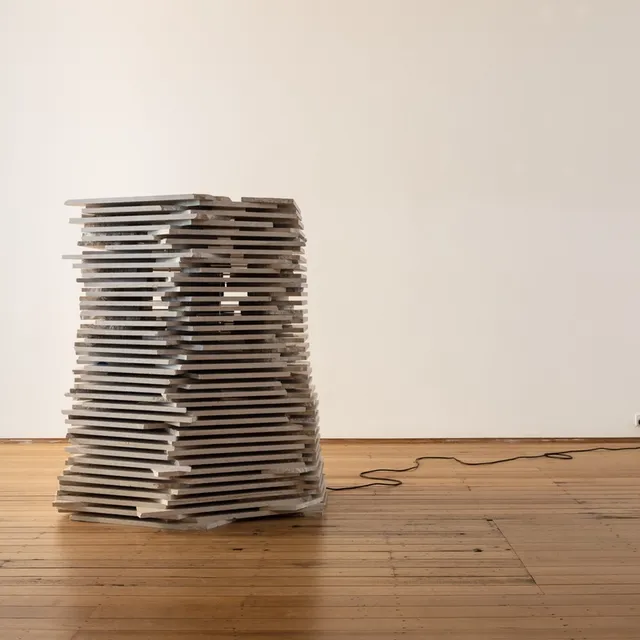
Each artist, in their own way, contends with this dilemma of what it means to take refuge among their slaughterers, and to celebrate the very cultures they were expected to disavow upon the acceptance of citizenship or ‘safe’ residence. Alavi, Kaake, Tahayori and Zand look to their bodies, their ancestors, and their homelands to articulate the ambivalent experience of growing up at the intersections of queer and SWANA communities, expressing a defiant pride in their cultures of origin while challenging the racialised stereotypes of the homophobic Muslim migrant. They do so with such delicate attention to material detail, moreover, and such softness.
Many years after Pauline Hanson’s maiden speech, her paranoid fears of the Asian invasion gained prominence again during the height of the COVID-19 pandemic when conspiracies were amassing concerning the virus’s likely origin in China, tapping into existing stereotypes of the Asian immigrant as contaminated, unsanitary and incompatible with an Australian way of life. Though those representations were commonly attributed to East Asians, they are also inseparable from the 20-year blood-soaked history of the War on Terror, which neatly encompassed the invasion of Iraq and Afghanistan, conducted with the ardent cooperation of Australia’s armed forces and certainly at the lofty expense of the Australian taxpayer.
In the present exhibition, I see the proud agents of Australia’s demographic shift away from white settler hegemony. And yes, perhaps we do threaten certain norms of deference and erasure, particularly when it comes to immigrants and people of colour. I see artists who are uninterested in assimilation and cultural amnesia, whose artworks are textured by the strength of their legacy and migratory pathways, a spiritual fortitude that commands its own respect. Their practices refuse to celebrate Indigenous dispossession and the racial stratification of the modern Australian project, so long as that project remains unwilling to honour reconciliation.
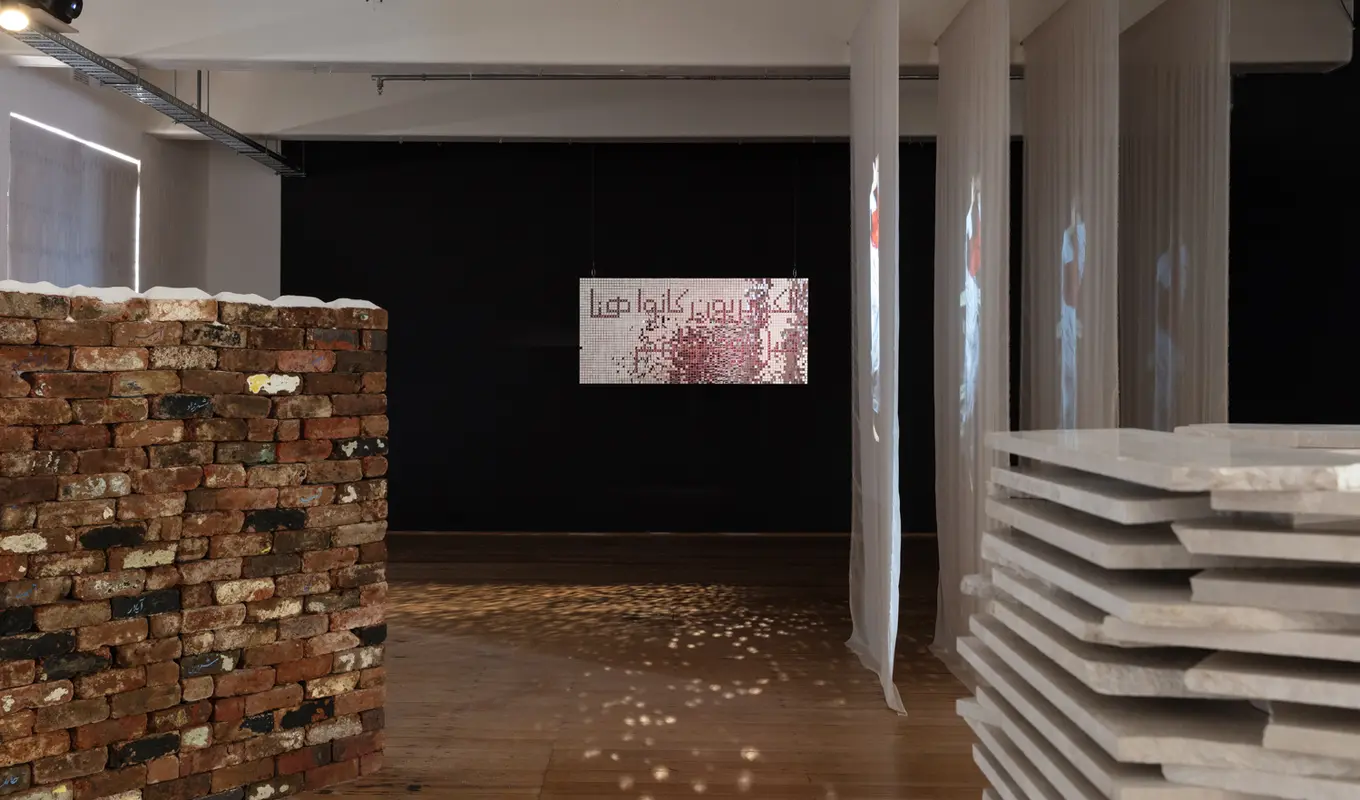
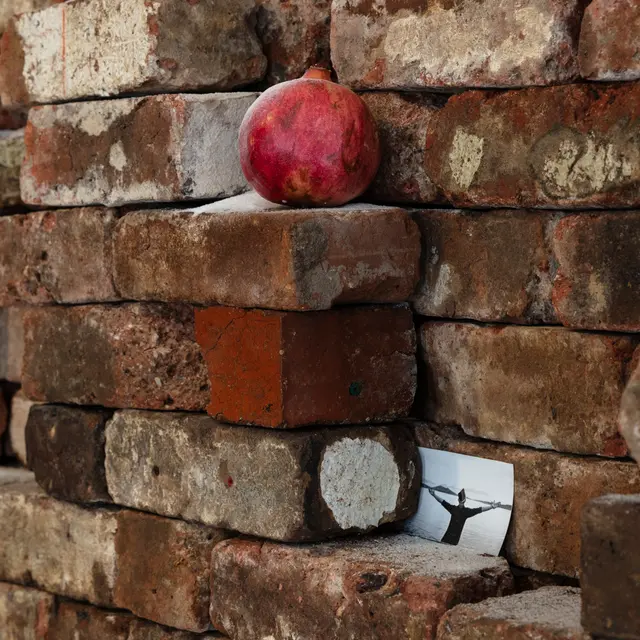
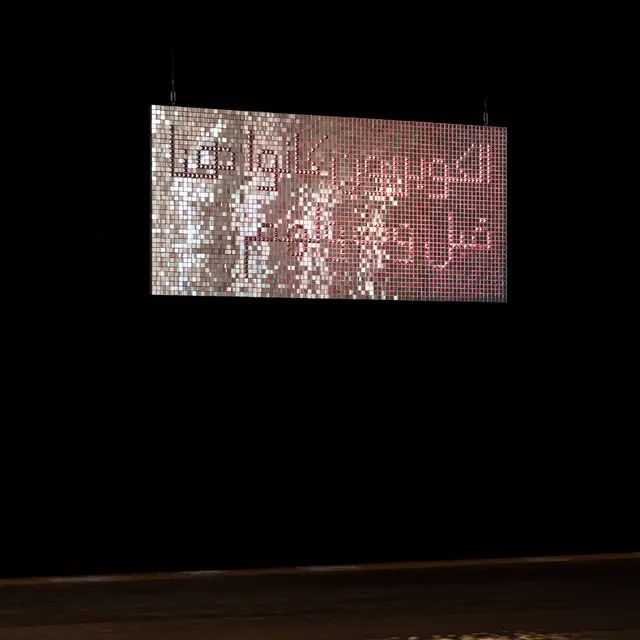
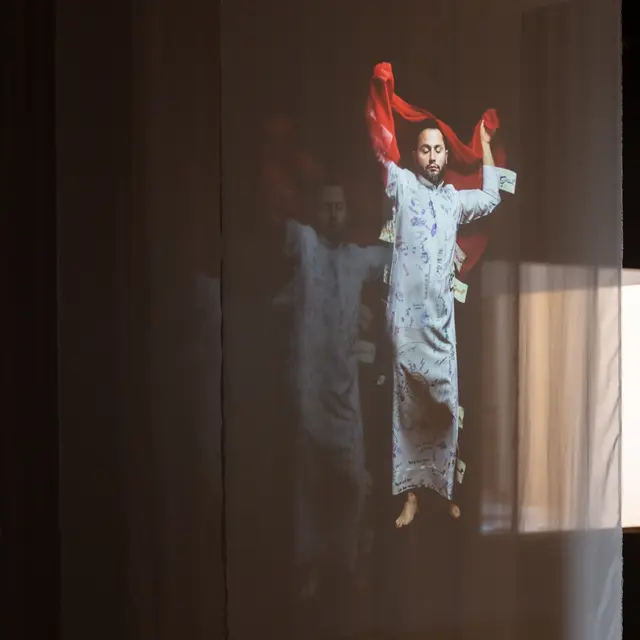
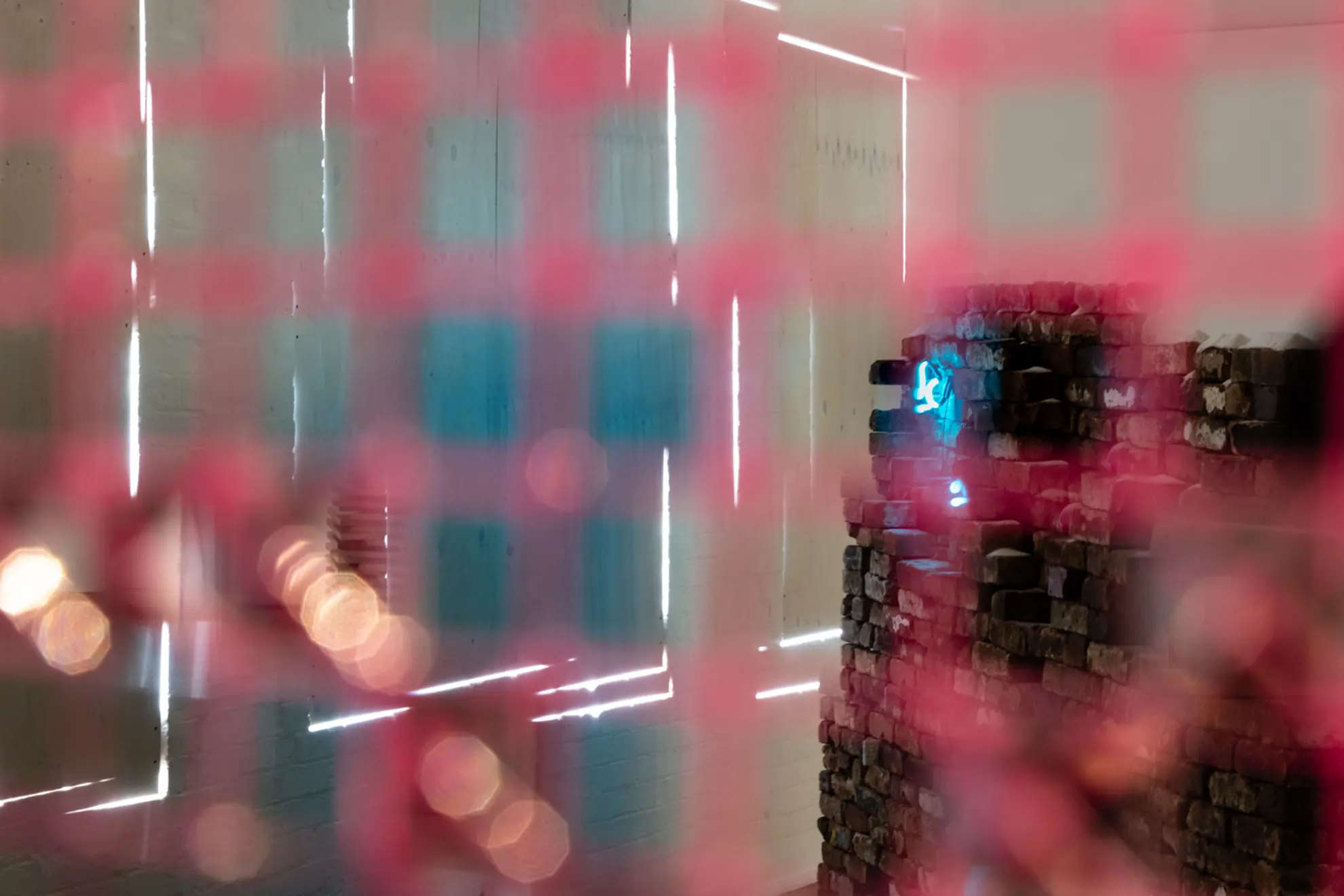
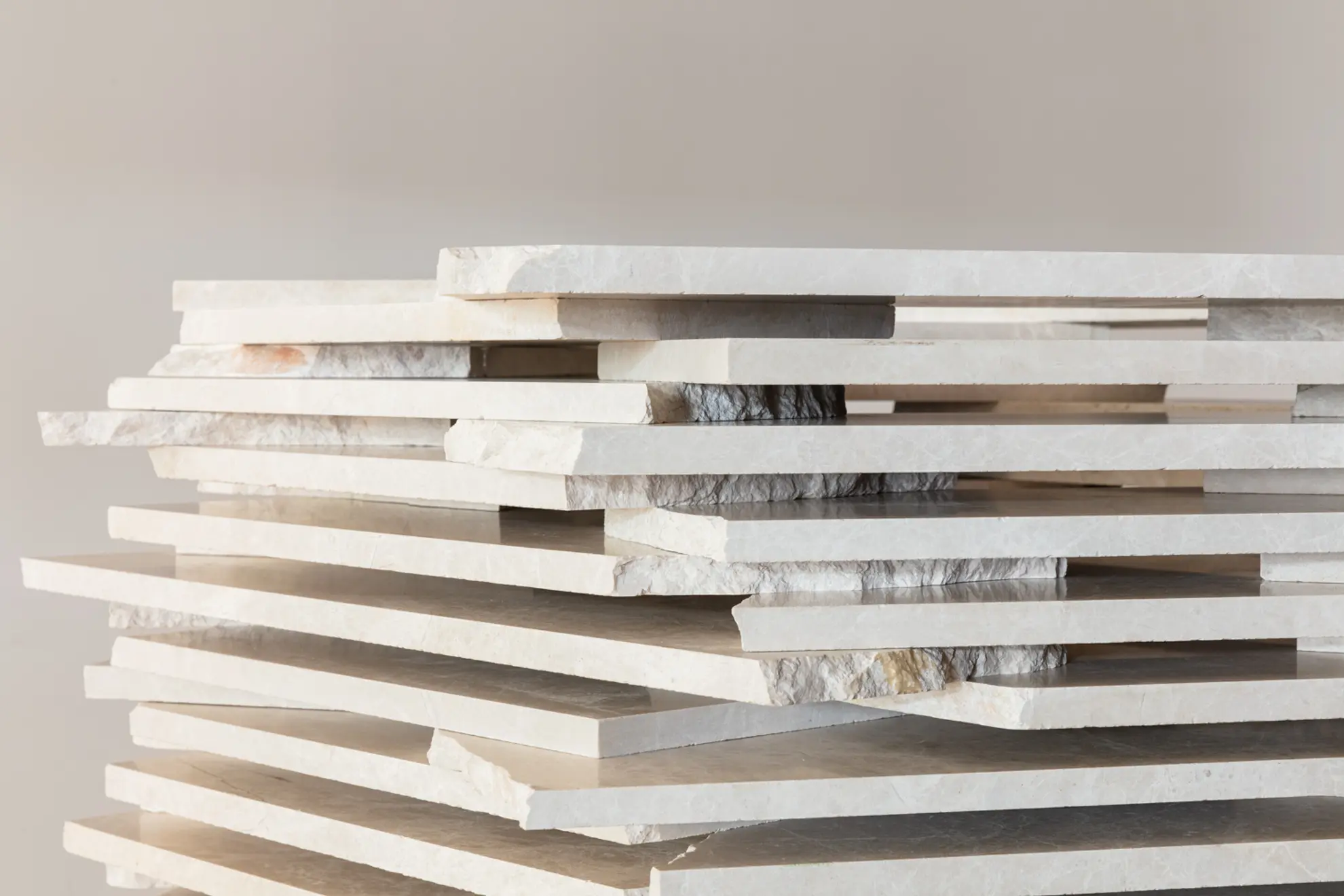
Using materials like marble, brick, abayas, mirrors, and cultural song, the exhibiting artists in rūḥ al-rūḥ – jan-e janān draw indelibly on their culture and queerness to make art that is inextricable from both. They do not curtsy before the reigning monarch of the nation’s ongoing colonial apparatus, and they do not seek the permission of Pauline Hanson or shame-faced Bob Katter in order to belong or stand shoulder to shoulder beside the nation’s first displaced people.
The queer imperative to dismantle multiculturalism is motivated by the idea that good behaviour does not authorise a person’s citizenship, that immigrants do not need to assimilate to be treated with respect, and that whiteness left to its own devices will necessarily continue to reproduce the unequal conditions on which it was built.
To queer a nation is to squash homogenising national myths that suggest a fair go is a right granted to all and, in fact, to default to unfairness as a structuring force. We are not a white nation, and we never have been. Once the discourse of race in Australia confirms that systems here are disproportionately bent in favour of white people, and the conversation moves beyond whether we as a people are racist, then the work of progress can truly begin. Queering the discourse of multiculturalism aims to reorganise a political system designed to maintain the power of whiteness, even when the faces on Harmony Day brochures paint a different picture.
Bobuq Sayed is an artist, writer and cultural worker of the Afghan diaspora. They are the author of A Brief History of Australian Terror and the novel No God but Us. They were a 2022–23 Steinbeck fellow at San José State University, a Lambda Literary scholar, and an award-winning James A. Michener fellow in the University of Miami's MFA program. Bobuq currently lives in New York City.