Carlos Eduardo Morreo
“Ecclesiogenesis”
“Ecclesiogenesis”, I will begin here.
What is a Church or an ecclesia? Though that’s not quite the question. Here is a different one that will matter to us more: Where does a Church begin? What are its origins?
The Brazilian liberation theologian Leonardo Boff says something simple and beautiful about the ecclesial base communities that liberation theology sought to build, to encourage, to let flower in the 1970s and 1980s: these are churches or communities where each can be welcomed by name.
A true church is where each can be welcomed by name.
So, I would like to welcome you each by your name, for a church of liberation.
Because if there is one, if we want one, if we still find ourselves in need of one, it will be one where each one of you can be welcomed by name.
Tina. Kosta. Carlos.
[Voice your name]
Ecclesiogenesis is the new name of the game we play, because the game we play has a new name: ecclesiogenesis.
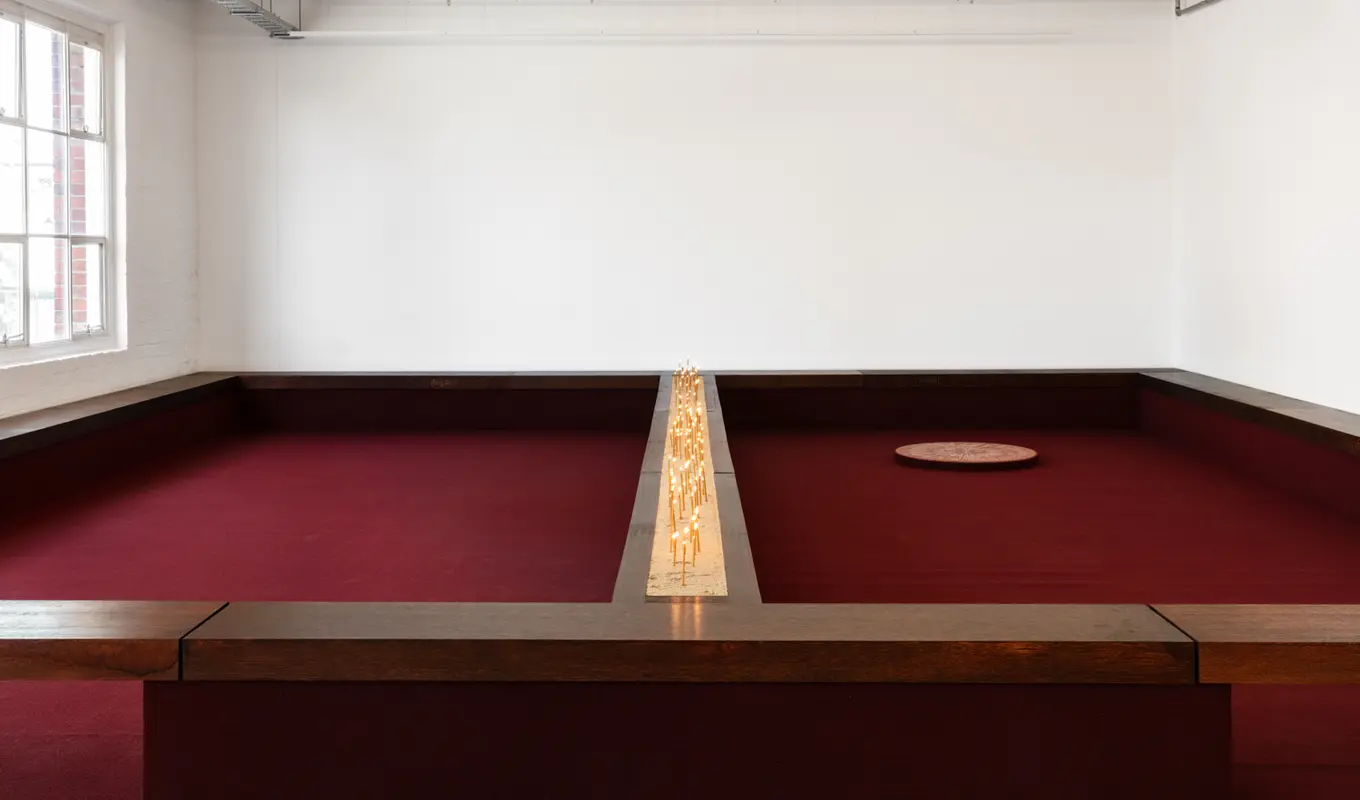
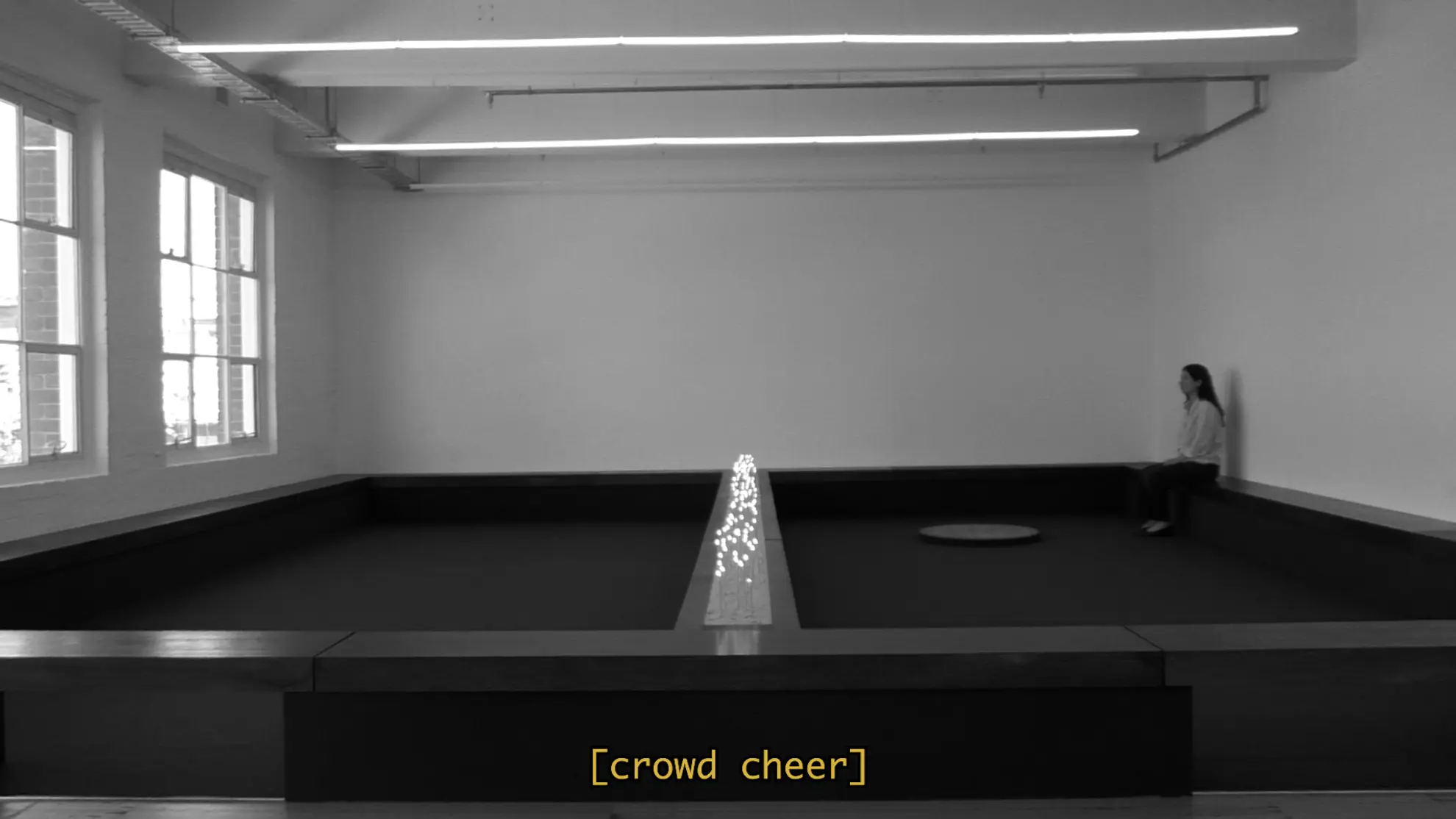
And if this game we play, here, enclosed, in backgammon-wood, in tavli-wooden art, as board and game, with sand and votive candle, if the construction of this church points to something, then the question that matters is how does it appear or flower, how does it begin, what is its genesis?
Leonardo Boff is still alive and writing weekly — so let us keep him in our thoughts as we continue — and he writes of a church born of the people through the spirit of God, of ordinary people, gathered through names.
And here, in this tavli that is our here: a church is born polyphonic, of names and voices, oriented in some unknown way toward God, and toward the experience of play.
Does God play? This little wooden ecclesia in genesis of ours wonders. If God did play — and surely God must — what kind of game would that game be?
A reading from the Book of Acts.
The Book of Acts is traditionally attributed to Luke, author of the third gospel.
In Acts, Luke narrates the event of the Pentecost, which is seen as the founding of the Church through the breath and fire of the Holy Spirit. A crowd gathered in Jerusalem, hears the disciples speak in their own languages.
But we should be brought back by something else that happens here! Something more primary. Something that comes after voice and before hearing.
A reading from the Book of Acts 2:5-13:
Now there were devout Jews from every nation under heaven living in Jerusalem. And at this sound, the crowd gathered and was bewildered, because each one heard them speaking in the native language of each.
Amazed and astonished, they asked: Are not all these [disciples] who are speaking Galileans? And how is it that we hear, each of us, in our own native language?
Parthians, Medes, Elamites, and residents of Mesopotamia, Judea and Cappadocia, Pontus, and Asia, Phrygia and Pamphylia, Egypt and the parts of Libya belonging to Cyrene, and visitors from Rome, both Jews and proselytes, Cretans and Arabs — in our languages we hear them speaking about God’s deed of power.
All were amazed and perplexed, saying to one another: What does this mean?
But others sneered and said: They are filled with new wine.
The crowd was filled with new wine. Fully drunk with the fullness of voice, drunk by voice, voice-drunk, hearing the deeds of God.
Whose voice do they hear when they hear the disciples’ voice in their own language?
This is the Pentecost I want: not the miracle of speaking, but the miracle of hearing, voice-drunk. Not that the disciples spoke in tongues, but that we all heard, each one, in voice.
The miracle is not of the mouth. The miracle is of the ear.
The hearing, like the name, lands in the voice it belongs to.
This is what a church of liberation will do: it will not speak over you or against you. It speaks toward you, in the tongue your body already knows, in the voices your mother gave you, in the names that were yours before what lies outside this wooden frame decided what voices could be heard, and what names could be spoken.
Liberation theology understands this ecclesiogenesis — the creation of a church — as an event of salvation in history.
The very flowering of community is a salvific event.
And here is a community of tavli, a tavli of voices and names, and an enclosure that can hold it, welcoming it to play by name the game it wants to play.

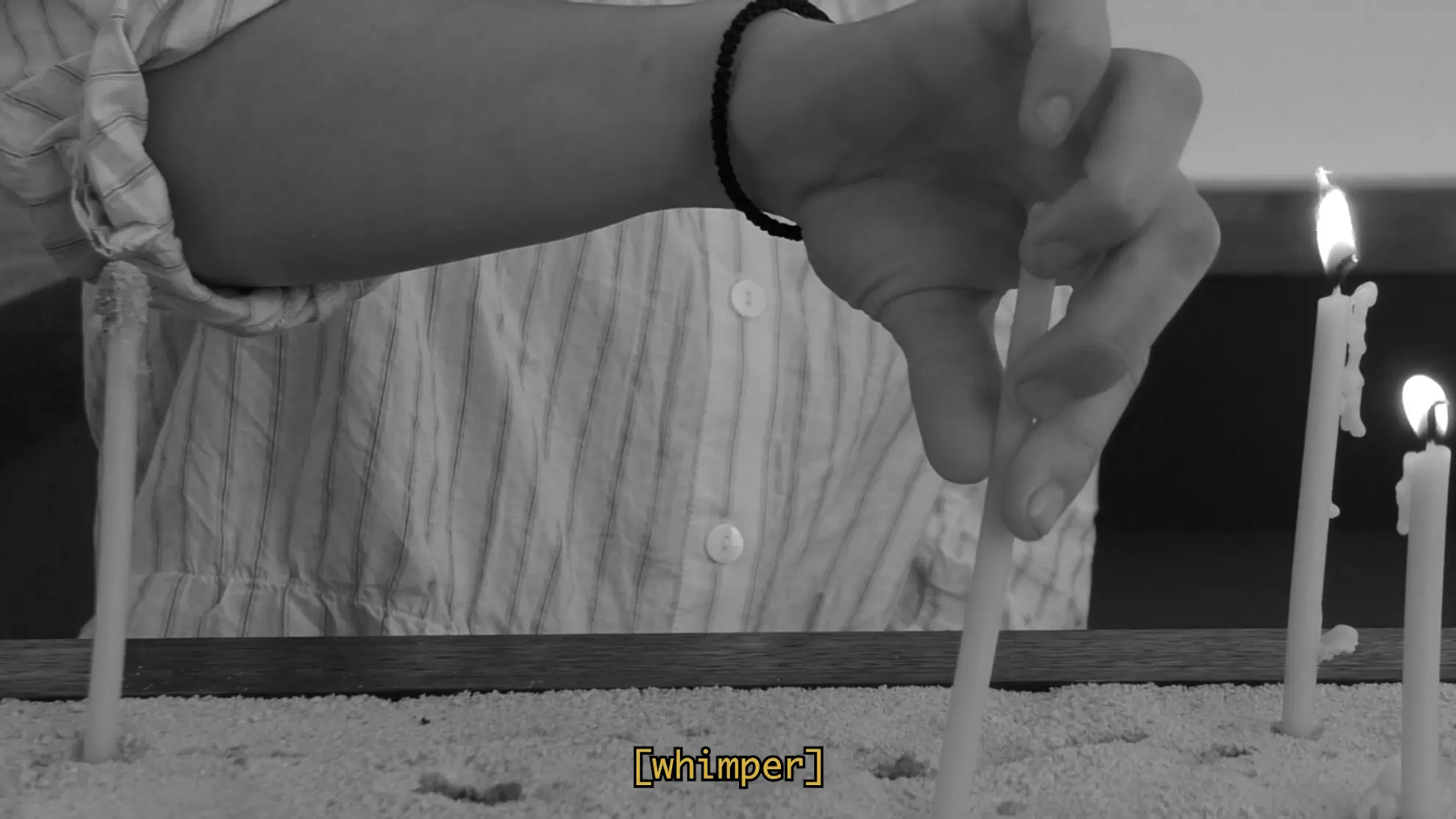
Look at the candles! And I ask you not to blink.
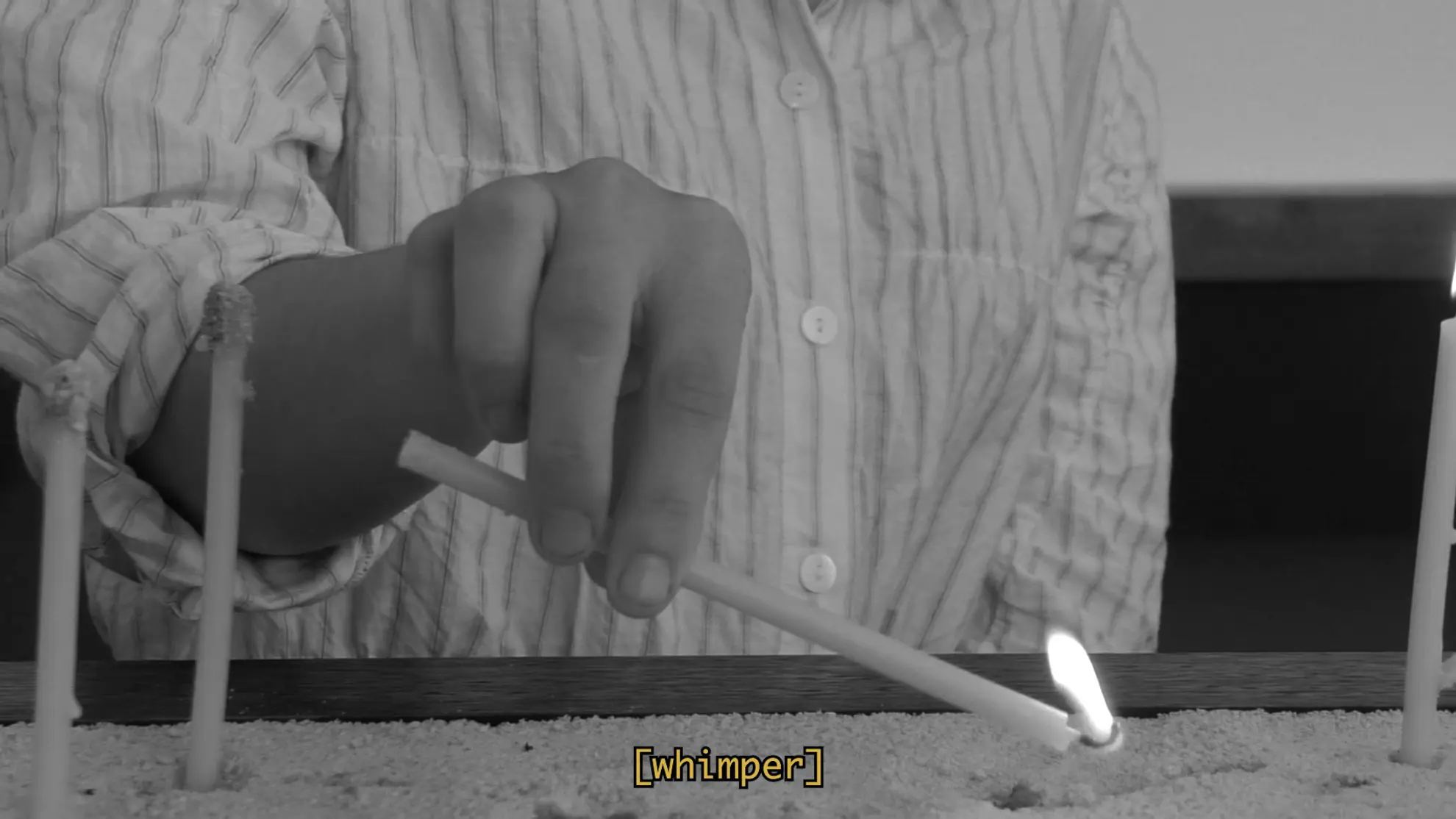
There were 76 candles when I first came to this place. I lit one before anyone noticed. I felt it had to be done in secret, in secret-flame, in whisper and pause.
Look at the candles!
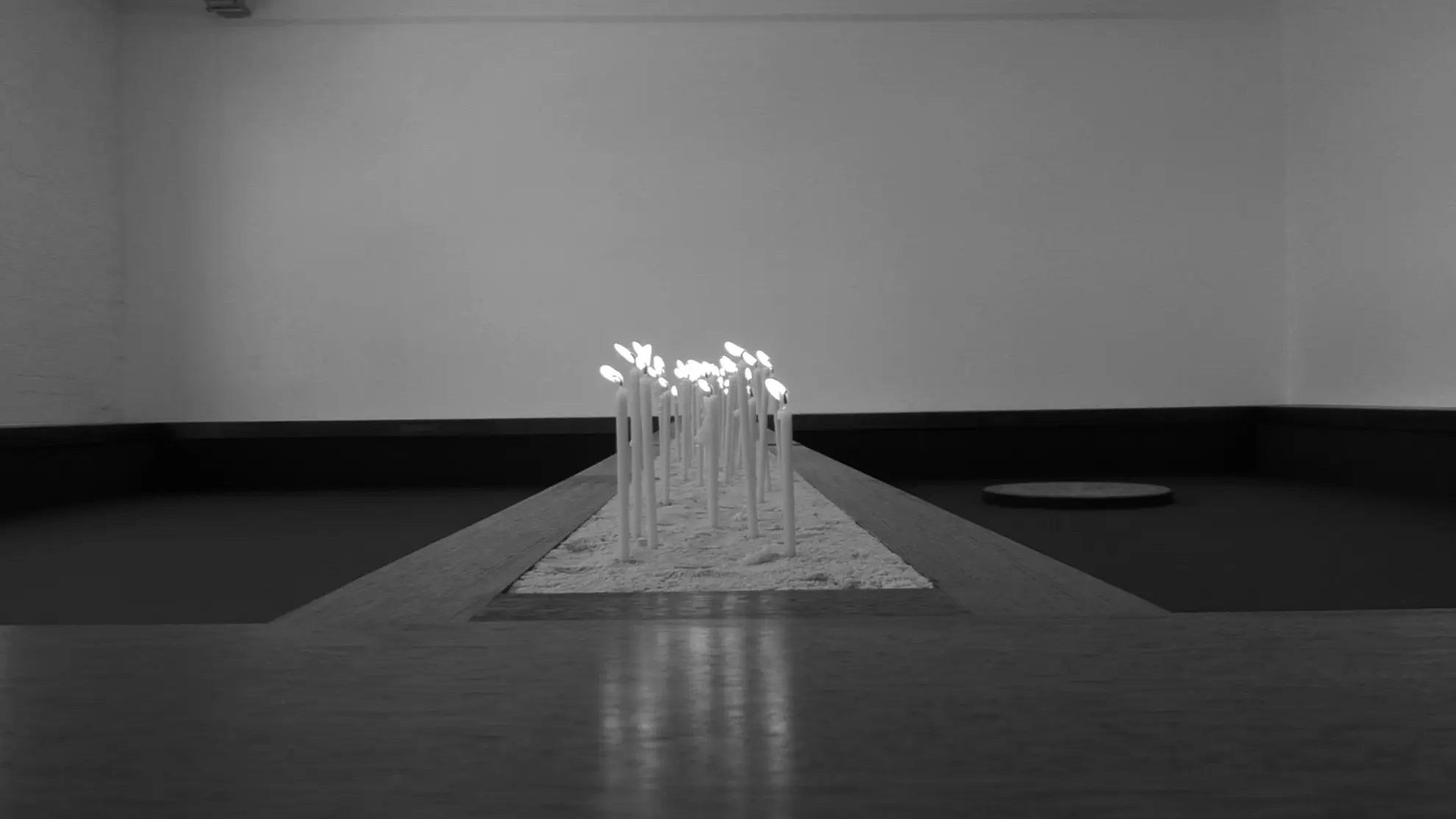
Each candle steps into chorus, one flame discordant with the others, sisters in flame, brothers in wax, all moving in time toward sand.
By the time I had been here three hours, only 11 candles remained lit. The ratio does not look good. Eleven lit candles to seventy-six. Only one in seven. But the sand receives all the dead equally.
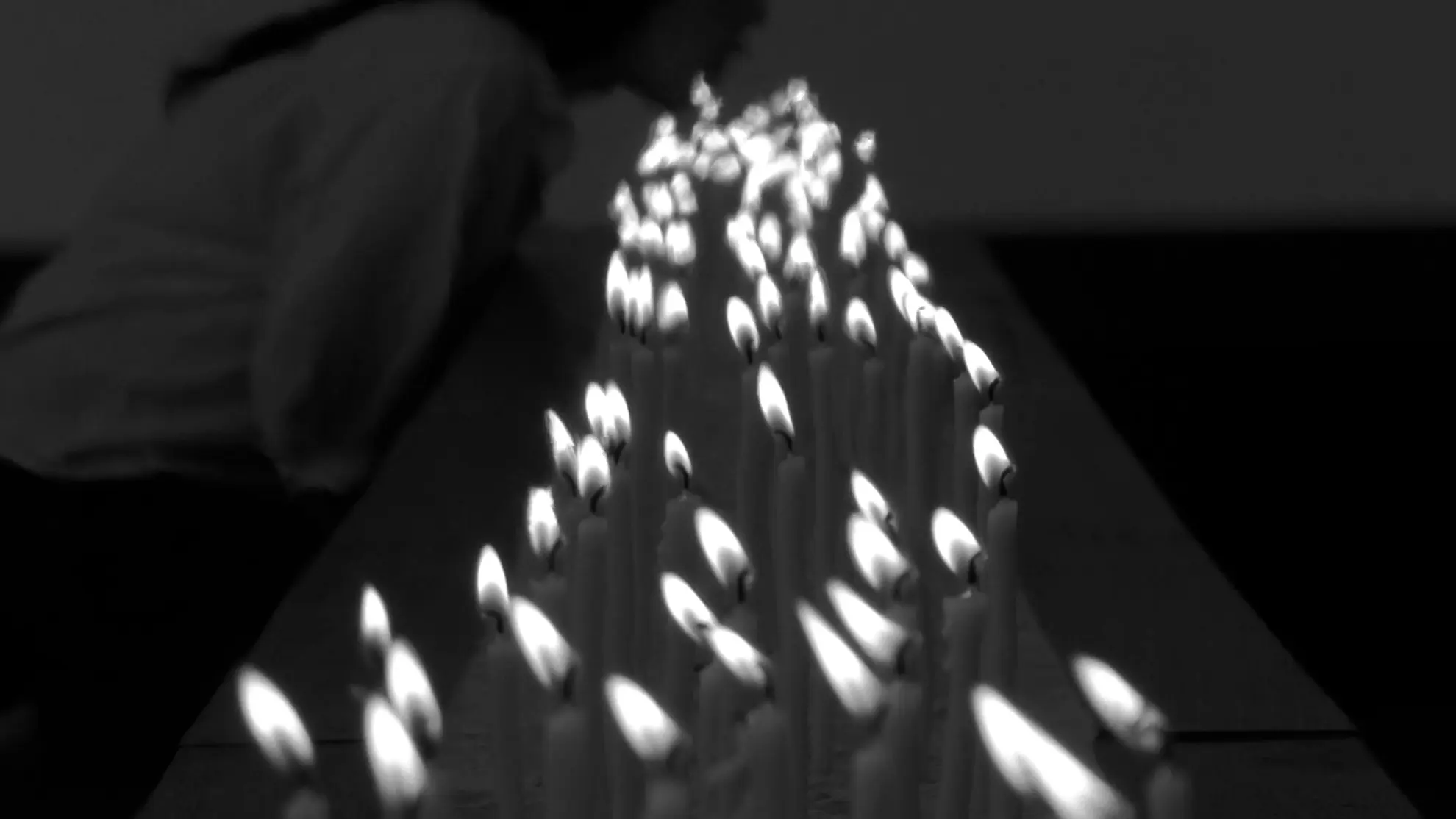
But look at them. Each candle a body. Each body a fire. Each fire not quite autonomous, but in full concert, living its life of wax and breath and slow consumption, each in communion.
This yellow species of beeswax, this genus of light, this particular life that has always been a flaming spirit, a holy ghost.
Each candle, voice-drunk, in this wooden church of sand and back-game board.
At church we always mouth something silently. Something reverently. Something that cannot be said out loud!
What can’t you say out loud?
What can’t be named by your own voice?
Tap your chest three times.
But I have seen that there is division in the tavli-church too!
In Spanish we speak of tavli and backgammon as games of chance, juegos de azar. But azar comes from the Arabic الزَّهْر (al-zahr), which in Arabic means dice, which in Spanish may mean fate, because the Arabic means: to flower, to shine, to appear. Like destiny. Like a flower. Like betting on the bloom.
The dice are outside this tavli. The ζάρια (zária) have been removed. Bring the dice back in! Let flowering fate seal. Let the flower of fate be part of what we make here.
Zahr, azar, zari, but also this hazardous bar — this hazardous bar of sand and candle — reminds us that we already play divided.
This is my inner board, my mother. That is your outer board, not my mother. The hazardous bar between us divides, yes. But without the bar there is no us to bring together.
My Orthodox daughter, not Greek but Russian, will one day hear her mother’s voice.
Подсвечники (podsvechniki), she will say, for the hazardous bar — the Russian name for that which holds the candles.
That which holds the light without being the light.
Podsvechniki: not the flame itself but what makes the flame possible, what gives it ground, what receives the wax when the burning is done.
Песочница (pesochnitsa), our daughter will hear — the little sandbox, for the bar. A tavli of memory. The sand that receives all, that receives all the living and dead, that received all the dead, equally, against the decisions the world makes about which deaths are worth mourning and which are not.

The ecclesia I want is raging and beautiful. If not angry, then at the very least about to tear it all down and build it all again, with sand boxes, and beeswax, and the names of those outside we forgot to welcome.
The hazardous flame within the bar is also a radical flame.
The light of the flame belongs fully to the zária, flowering, shining, appearing, blooming as history. If there is a church of liberation it will need to flower like this.
The game we play is ecclesiogenesis: the church that begins again, here, within this wooden frame, within this back game, with our own names and voice-drunk, with these candles, and this bar that divides, and this bar that unites, this inner that is also outer, this outer that is also another home, this game that is not a game.
[Voice your name]
Each name a flame. Each flame a voice. Each name spoken in the language the body already knows, amazed, astonished, bewildered, and filled, fully filled, of new voice.
Look at the candles. Don’t blink.
Ecclesiogenesis. Church begins. The flame is flowering new names.
Dr Carlos Eduardo Morreo is a scholar-activist, writer and editor, and a citizen of Venezuela. Carlos is the former executive officer of the Institute of Postcolonial Studies (IPCS) in North Melbourne, and is currently a lecturer in the History of Ideas program at Trinity College, University of Melbourne. He is the editor of Green Agenda and a member and organiser with LASNET – the Latin American Solidarity Network and the Free Palestine Coalition Naarm. He lives in West Melbourne on the lands of the Wurundjeri Woi-wurrung and the Bunurong Boon Wurrung peoples.