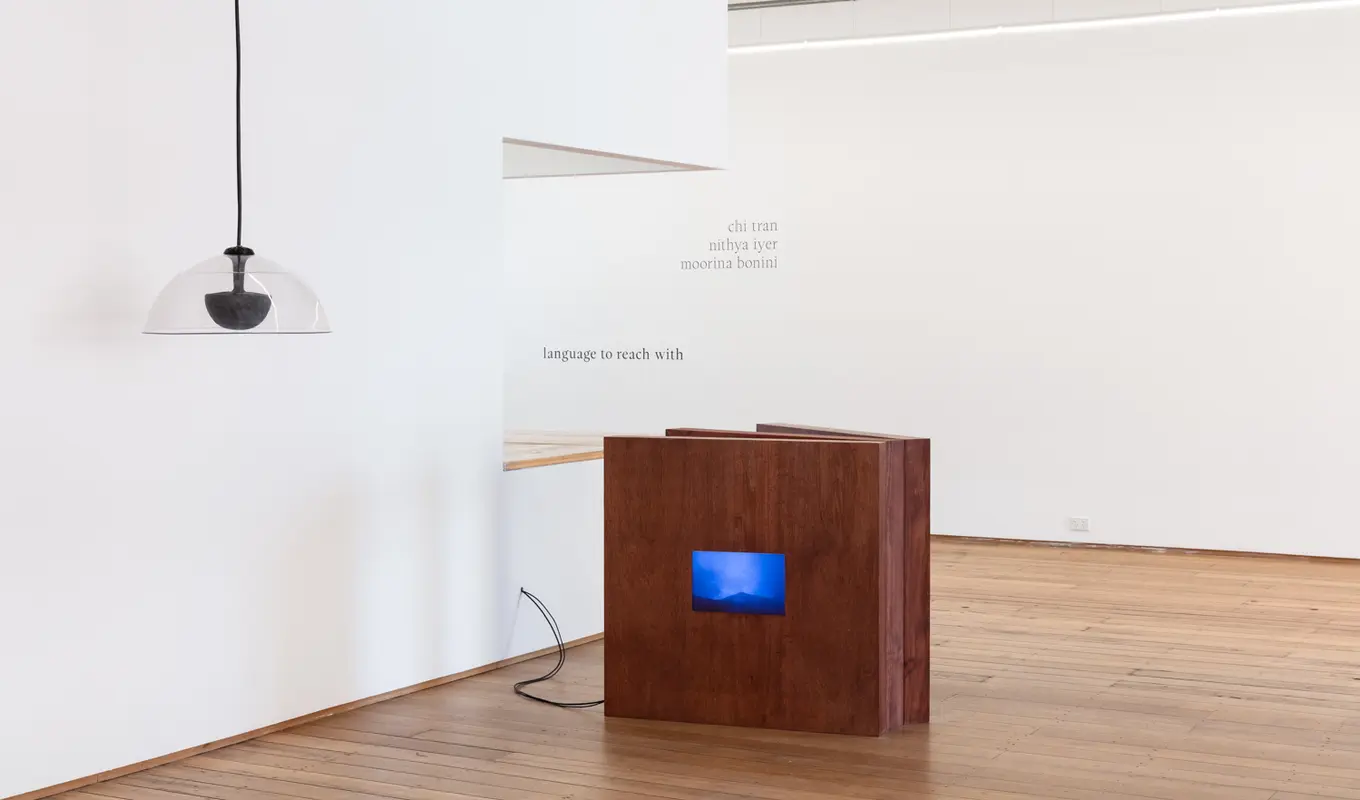
“language to reach with artist symposium”
Moorina Bonini, Nithya Iyer, Chi Tran, Laniyuk, Hayden Ryan, Nadeem Tiafau Eshraghi and Riana Head-Toussaint
22 Oct → 22 Oct 2026
Collingwood Yards
Join us for a day of sharing and discussion to close out the final week of language to reach with.
Thursday 22 October, 1.30 → 7.30pm
The language to reach with symposium will feature artist talks, knowledge sharing, performance, chai and chaat with:
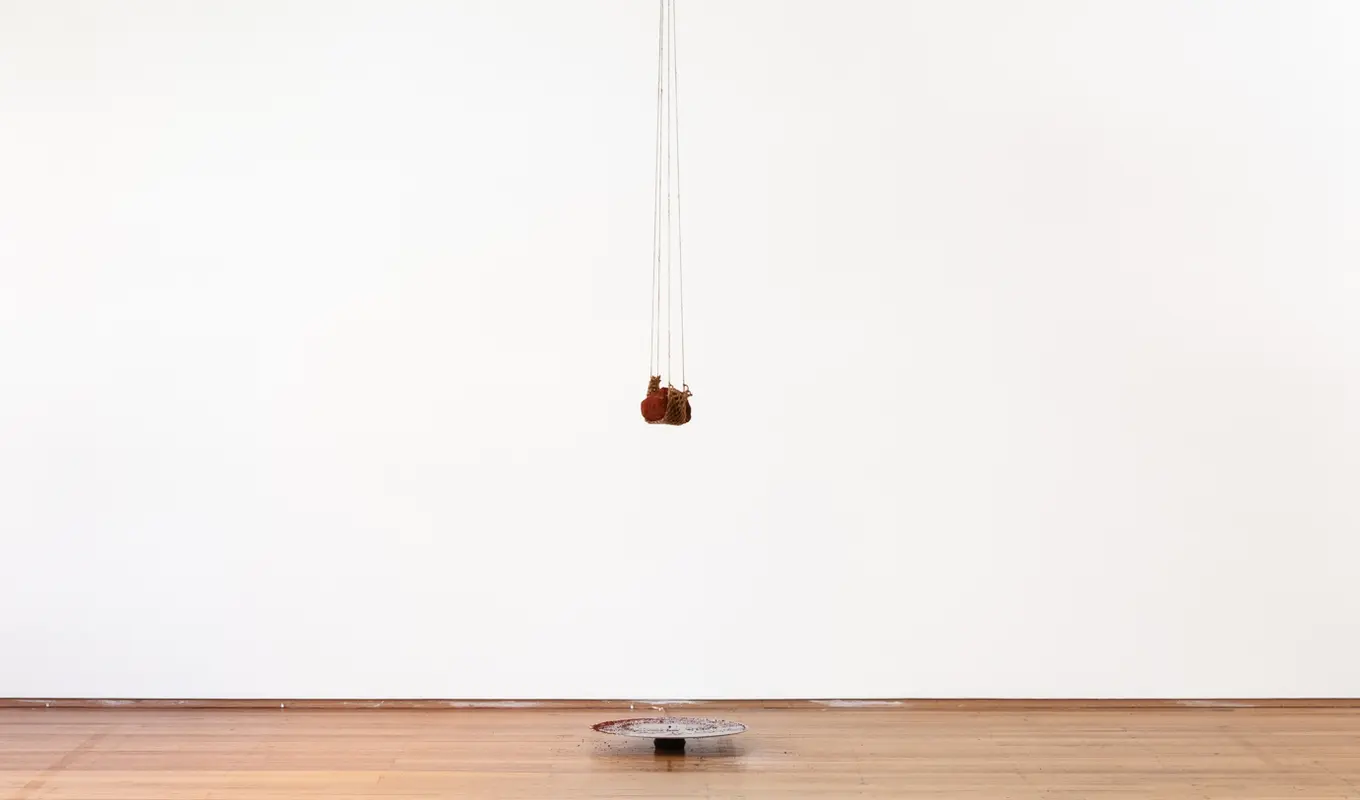
Moorina Bonini discussing The language of Woka alongside contributor Hayden Ryan.
Chi Tran discussing the various musings, failures and research that filtered into Unable to rest because unable to know.
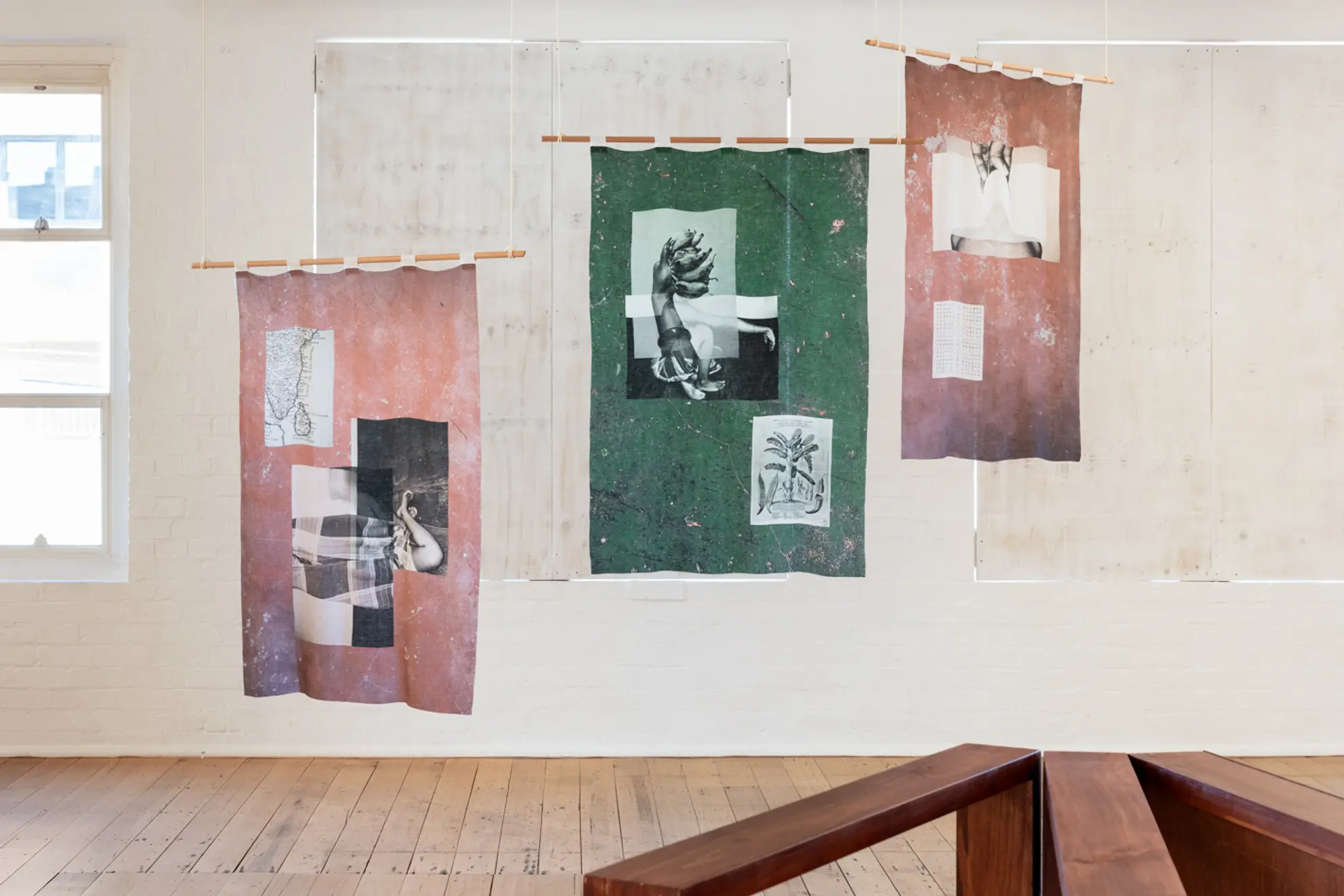
A presentation by internationally based Nithya Iyer who will share the process and research that informed Musa genus.
Performances expressing modalities of language by invited artists Nadeem Tiafau Eshraghi, Riana Head-Toussaint and a keynote by Laniyuk.
Tickets by donation
Program:
1:30pm Welcome to Country
Opening remarks – Tahmina Maskinyar
Performance – Nadeem Tiafau Eshrāghi
Keynote – Laniyuk
3:30PM Break
Artist talk – Chi Tran
Artist talk – Nithya Iyer
5:00PM Break
Presentation – Riana Head–Toussaint
Artist Talk – Moorina Bonini and Hayden Ryan
Closing remarks – Joanna Kitto
7:30PM PROGRAM END
This event is presented as part of AusArt Day, a nation-wide call to support the art that impacts you with a donation. Pay what you can/want.
While West Space endeavours to provide free programming throughout our artistic program, we are often required to request registration to cover costs associated with ensuring we can continue supporting artists and providing these types of gatherings.
Moorina Bonini is a proud descendant of the Yorta Yorta Dhulunyagen family clan of Ulupna and the Yorta Yorta, Wurundjeri and Wiradjuri Briggs/McCrae family. An artist of Aboriginal and Italian heritage, her practice critiques and disrupts Eurocentric frameworks that shape institutional understandings of Indigenous identity. Grounded in Indigenous Knowledge systems, Bonini’s work challenges colonial narratives, re-centres Aboriginal perspectives, and explores the intersections of culture, history and representation. Her practice-led research interrogates Western binaries and categorisations historically imposed upon Aboriginal peoples. Through installation, moving image and cultural practice, she examines how Indigenous ways of knowing, doing and being resist these structures and create space for self-determined representations of Aboriginal identity and experience.
Nithya Iyer is an interdisciplinary researcher of South Indian Tamil-descent. Raised in Melbourne, Australia, she currently resides in Goa, India. Working across performance, photography, installation and writing, Iyer seeks to investigate how the body, and the body-in-motion, relates to notions of inheritance and territory. Her works combine research and form as a means to challenge the parameters of conventional narratives, mediums and aesthetics. This is sought through a pedagogical method centring phenomenology – or the study of consciousness – as a means of emergent knowledge-making. Trained for 15 years in the Indian dance forms of Bharatanatyam and Odissi at the Chandrabhanu Bharatalaya Academy of Dance, Australia, Iyer’s subsequent inquiries often bring these choreographic aesthetics into dialogue with experimental and improvisational mediums. The capacity of the body as a repository of memory as well as an agent of metamorphoses is a strong focus of her solo and collaborative projects.
Chi Tran is a research-based writer and artist, whose works span essay, installation, sound and the moving image. She is interested in how the unseen and intuited can open dormant paths for truth and relation, with her early work exploring failures of language and expression. Tran's current research interests are histories of independent filmmaking and Vietnamese theology, with her current project looking at French Christian mysticism and its colonial reverberations in Vietnam.
Laniyuk is a Larrakia, Kungarakan, Gurindji and French political creative whose art practice is grounded in cultural, language and land reclamation. She writes and performs poetry, speculative fiction, is a visual artist and is moving into documentary and film. Laniyuk is part of a collective of young Larrakia people called Protect Larrakia Country campaigning for the Return of Lee Point to Larrakia families and to stop the expansion of the Middle Arm gas hub in Darwin. With the worsening climate crisis and continuation of the global colonial project she believes passionately in the power of art to pave futures of safety and belonging leading us back to being in right relationship with land, water and each other.
Hayden Ryan is a Yuin First Nations sound scholar and spatial audio artist from the south east coast of New South Wales, currently in Naarm/Melbourne. His work centres Indigenous sonic and spatial practice, a concept that realises the inextricability of land, body sound and culture within Indigenous knowledge systems.
Nadeem Tiafau Eshrāghi (Tagata Sāmoa, Persian) is an artist and arts worker living and working between Naarm, Meanjin and Samoa. Their creative practice delves into cultural knowledge and memory to navigate the nuanced modes and mutations of diaspora on unceded lands. Through sound, body and space, they mediate personal and collective experiences into ritual, reflective offerings that function as living archives.
Riana Head-Toussaint (she/they) is an interdisciplinary crip/disabled artist, DJ and curator/community organiser of Afro-Caribbean heritage. Her practice sits at the intersection of creative expression, activism, cultural exchange and disability justice. Their work is aimed at challenging deep-rooted systems and ways of thinking, driving social change, and creating spaces that invite deeper embodiment and expansive ways of experiencing the world. Riana is the founder and curator of CRIP RAVE THEORY, a project that draws on intersectional crip/disabled knowledge to expand sound and club culture. They currently reside on sacred, unceded Wurundjeri Country.